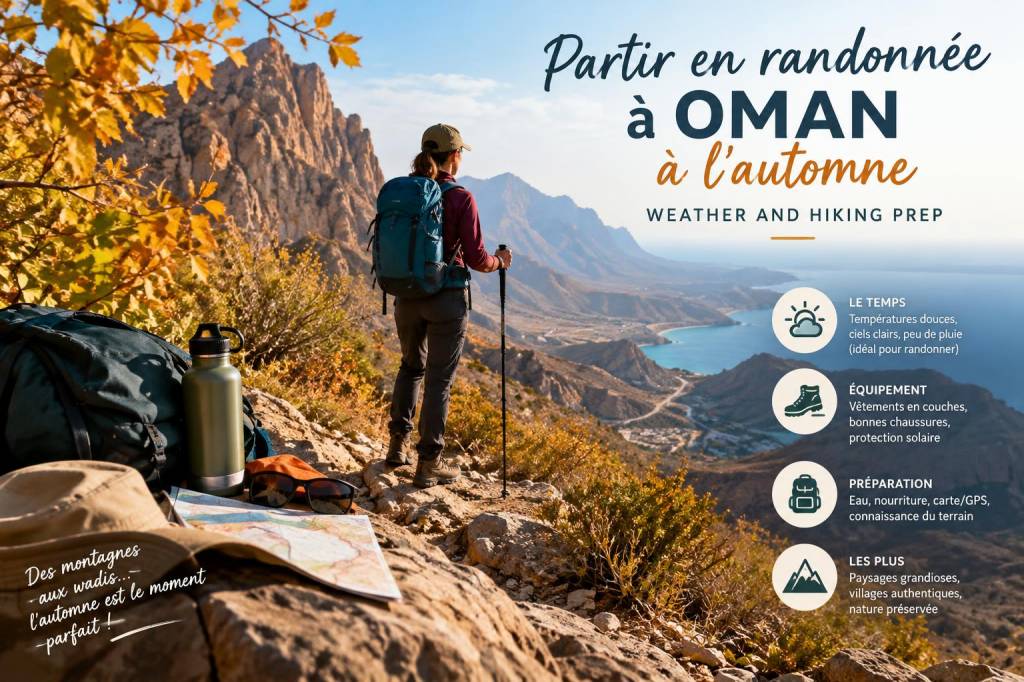
When I plan a desert-and-mountain trip, I want two things at once: reliable weather and a route that feels rewarding from day one. That is exactly why partir en randonnée à Oman à lautomne has become such an appealing idea for me. Autumn in Oman sits in a sweet spot: summer heat has eased, the mountains feel more accessible, and long valley walks become far more realistic for regular travelers, not only for hardened desert hikers.
For a blog audience, I also see a clear content lesson here: a destination like Oman rewards preparation, timing, and precise expectations. The wrong season can turn a beautiful trail into a draining experience, while the right month can turn it into a memorable, high-value journey. In that sense, this topic is a strong match for travel planning, content strategy, and audience trust, because readers want practical clarity before they commit to flights, gear, and route choices.
Why autumn changes everything in Oman
Oman’s landscape is dramatic year-round, but autumn marks a meaningful transition. September can still feel hot, especially inland, yet October and November usually bring more comfortable daytime conditions in many regions. In mountain areas such as Jebel Akhdar and Jebel Shams, that shift matters a lot. A trail that might feel punishing in midsummer becomes manageable, and in some places genuinely pleasant, during this period.
What I notice most is the difference in effort. In hot weather, a short ascent can feel like a major athletic event. In autumn, I can spend more time observing ridges, terraces, and wadis instead of constantly managing body temperature. That does not mean conditions are cool everywhere, though. Oman is still a warm country, and daylight sun remains strong. I plan for heat exposure, hydration, and route exposure even when forecasts look favorable.
According to the Oman Meteorology office and major climate references such as World Weather Online and Climate-Data.org, autumn is generally more suitable for outdoor activity than the peak summer months, especially in higher elevations. I treat that as a broad signal, not a guarantee, because local variation in Oman is real and important.
What weather usually looks like in November
November is often the month I would prioritize if I wanted a comfortable hiking window. In Muscat and coastal zones, temperatures are usually much more moderate than in summer. Inland valleys can still be warm during midday, but dawn starts are far more practical. In the mountains, I can often enjoy crisp mornings, dry air, and clear visibility.
From a practical hiking perspective, November can offer:
- More tolerable daytime temperatures for moderate hikes
- Cooler mornings that suit early starts
- Lower risk of oppressive heat stress than in summer
- Better comfort for multi-hour walking on exposed terrain
- Greater flexibility for combining hiking with sightseeing
Still, I never confuse “more comfortable” with “easy.” Oman’s mountain trails can be rocky, steep, and remote. The surface often demands attention, and shade may be limited. Even in November, I plan like someone entering a dry mountain environment rather than a cool European hiking region.
Where I would hike first in autumn
If I were building an autumn hiking itinerary in Oman, I would focus on elevation and scenery variety. Some areas offer more reliable comfort than others, and the experience differs in a useful way from route to route.
| Area | What I would expect | Why it works in autumn |
|---|---|---|
| Jebel Akhdar | Terraces, villages, cooler air, dramatic viewpoints | Higher elevation often means better daytime comfort |
| Jebel Shams | Grand canyon scenery, ridge walks, long views | Less heat pressure than lowland routes, strong visibility |
| Wadi Shab | Water, pools, narrow passages, popular day hike | Still warm, but autumn makes the approach more manageable |
| Wadi Bani Khalid | Accessible wadi landscape, light trekking, swimming spots | Useful for mixed activity and lighter hiking days |
| Ras Al Jinz region | Coastal landscape and nature experiences | Good add-on for a broader nature itinerary |
I usually recommend mixing one mountain day, one wadi day, and one easier recovery day. That structure keeps the trip balanced and reduces fatigue. If the goal is to capture the essence of Oman, I would rather do three well-chosen hikes than overpack the schedule with too many ambitious routes.
What I pack for comfort and safety
My packing list for Oman in autumn is built around sun exposure, hydration, traction, and flexibility. I do not need winter gear in most cases, but I do need more than a casual walking outfit.
- Lightweight moisture-wicking shirts
- Breathable hiking trousers or shorts with sun protection
- Sturdy hiking shoes with strong grip
- At least one spare pair of socks
- Wide-brim hat or cap
- Sunglasses with strong UV protection
- High-SPF sunscreen
- Hydration bladder or multiple water bottles
- Electrolyte tablets or powder
- Small first-aid kit
- Offline map app and power bank
One item I consider essential is water planning. I do not rely on “I will find some on the route.” In dry mountain terrain, that is not a strategy. I start with more water than I think I will need, especially for exposed sections or routes with uncertain timing.
How I adapt a hiking day to local conditions
My hiking routine in Oman changes once the day begins. I start early, often near sunrise, because that protects me from heat buildup and gives me more margin if a route takes longer than expected. I also pay close attention to slope orientation and shade. A route that looks similar on paper can feel very different depending on whether it spends two hours in direct sun.
I also use a simple decision framework before leaving:
- If temperatures are rising fast, I shorten the route
- If wind is strong on exposed ridges, I check footing carefully
- If the trail includes a wadi, I verify water levels and recent weather
- If the drive to the trailhead is long, I leave a larger buffer
- If I feel underhydrated before starting, I adjust the plan immediately
This approach matters because Oman’s terrain rewards patience. I have found that a slow, well-managed hike often delivers a better experience than a rushed attempt to “cover distance.” That is especially true for visitors who want to combine photography, village visits, and scenic stops.
What to watch for beyond temperature
Weather is not only about heat. In Oman, I also watch for flash-flood risk in wadis, trail erosion, slippery rock, and visibility changes in higher ground. Even if autumn is a better season overall, isolated rain can still affect route safety and access.
My main risk checks are simple:
- Recent rainfall in the region
- Flood alerts for wadis and low crossings
- Trail condition reports from local operators or travelers
- Sunset time, so I never underestimate return time
- Vehicle access, especially for remote mountain trailheads
These checks are not glamorous, but they matter. When I write or plan content around travel, I see the same pattern repeatedly: readers want inspiration, yet they value safety details most when they are embedded naturally in the article. That is why a strong hiking article should always move from dream to logistics without losing momentum.
A simple autumn hiking setup I would use
If I had to build a concise Oman hiking kit for autumn, I would keep it focused and light.
| Item | Priority | Reason |
|---|---|---|
| Water | Very high | Dry air and sun exposure increase fluid loss |
| Footwear | Very high | Rocky trails demand stable grip |
| Sun protection | Very high | UV exposure remains strong |
| Navigation | High | Remote zones can be confusing |
| Snacks | High | Long routes need energy management |
What makes October and November different in practice
Although autumn is one season, I do not treat October and November as identical. October can still feel transitional, especially in lower elevations and coastal regions. November usually feels more settled. That difference matters if I am choosing between a short city break with one hike and a fuller hiking trip with multiple outdoor days.
If I want a more forgiving experience, I lean toward November. If I want a shoulder-season feel with slightly fewer travelers and I am comfortable adjusting my route for heat, October can still work well. Either way, I would not plan an intense midday desert hike without checking current local temperatures and recent conditions first.
For trip planning readers, this is where specificity helps. Instead of saying “autumn is good,” I prefer “late autumn in higher elevations is more reliable for hiking comfort.” That kind of phrasing is more useful, more credible, and more likely to help someone make a real decision.
Sources I trust when I verify conditions
I always cross-check weather and route planning with more than one source. These are the references I would start with:
- UK Met Office travel weather information for Oman
- World Weather Online
- Climate-Data.org
- Experience Oman
When I compare those references, I am usually looking for consistency, not perfection. If several sources point in the same direction, I gain confidence. If they differ, I assume local variation or forecast uncertainty and plan more conservatively.