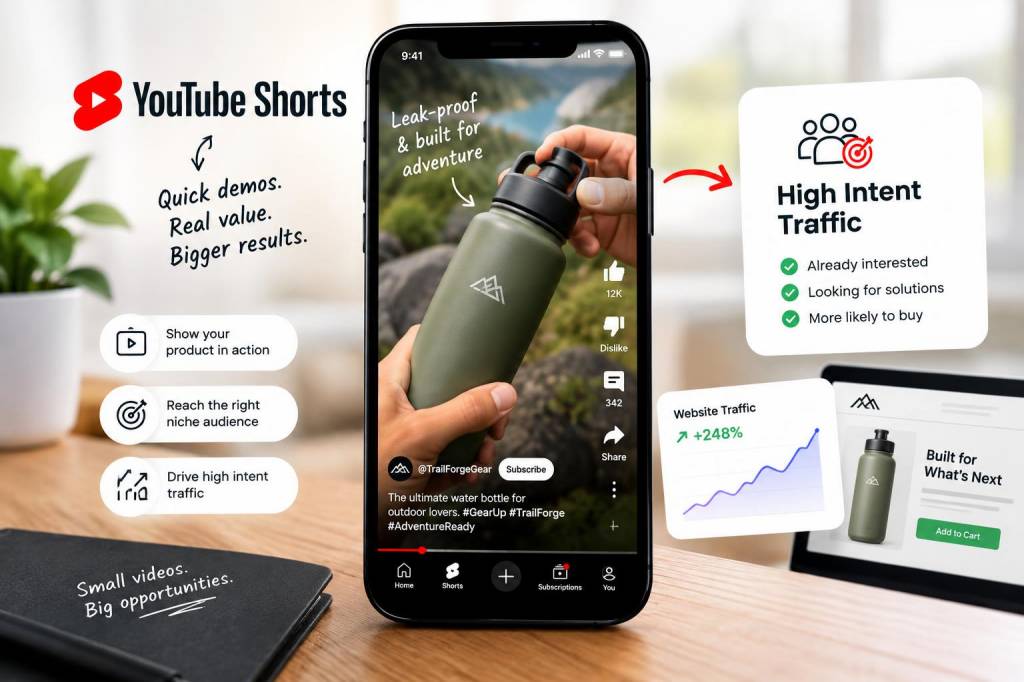
I have found that YouTube Shorts can do something many marketers still underestimate: they can move a curious viewer from casual scrolling to serious buying intent in a matter of seconds. For niche brands, that matters even more. When an audience is small, every view needs to work harder. A product demo on Shorts is not just a visibility play; it can become a direct path to people who are already searching for a solution, already aware of a problem, and already close to a decision.
What makes this format so powerful is that it removes a lot of friction. A long sales page can explain a product in depth, but a 20 to 45 second Short can show it doing exactly what it promises. I have seen that visual proof often creates a stronger reaction than a polished paragraph ever could. When viewers watch a product solve a specific problem in real time, they are not just entertained. They are mentally comparing it to what they already use, what they already dislike, and what they are already willing to change.
Why product demos perform so well in Shorts
I think one reason product demos work so well in this format is that they answer questions before a viewer even types them. People rarely come to a niche brand with broad curiosity. They usually come with a very specific need. A specialty coffee grinder, a minimalist travel backpack, a skincare tool for sensitive skin, or a software feature that saves ten minutes a day all fit the same pattern: the viewer wants proof, fast.
Short-form video is ideal for that kind of proof because it compresses the customer journey. Instead of asking someone to imagine the benefit, I can show it. Instead of describing materials, I can demonstrate durability. Instead of listing features, I can reveal outcomes. That directness is exactly what turns passive attention into high-intent traffic.
I also like how Shorts reward clarity. A niche brand does not need a big production budget to succeed. In fact, overly polished content can sometimes feel less believable. A simple, clean demo shot with strong framing, a visible problem, and a clear result often performs better because it feels useful rather than theatrical. For me, usefulness is what creates intent.
What high-intent traffic really looks like
Not every click is equal. When I talk about high-intent traffic, I mean viewers who are likely to take a meaningful next step after watching. That might be visiting a product page, checking pricing, reading reviews, joining an email list, or adding an item to cart. These visitors are different from broad-awareness audiences because they already understand what the product does and why it matters.
Shorts can create this kind of traffic when they do three things well:
- They show a recognizable problem very quickly.
- They demonstrate a real solution in action.
- They give a clear reason to click for more detail.
When those three elements line up, I see stronger site behavior afterward. People stay longer, explore more pages, and move further down the funnel. That is usually a sign that the traffic is not random. It is qualified.
What I focus on when creating a demo Short
When I plan a product demo for Shorts, I start with one question: what is the single strongest transformation I can show in under a minute? That question keeps the video focused. If I try to explain everything at once, the message gets diluted. If I pick one sharp use case, the result feels memorable.
I usually build the Short around a simple structure:
- Open with a problem or tension.
- Show the product entering the scene quickly.
- Demonstrate one clear action or result.
- End with a reason to click, learn more, or compare options.
This structure works because it mirrors buyer psychology. People do not need a full brand story in a Short. They need proof that something relevant exists and that it might solve a problem they care about. For niche brands, relevance is more valuable than reach.
I also pay attention to visual contrast. If I sell a product that improves speed, I want the old way and new way to feel different. If I sell something that improves comfort, I want the tension before use to be obvious. If I sell a tool or device, I want the action to be unmistakable. The more visible the value, the more likely a viewer is to keep watching and click through.
Why niche brands can win with smaller audiences
Broad brands often chase volume. Niche brands can win on precision. That is one reason I like Shorts for specialized products: they let a small brand speak directly to a highly specific audience without wasting effort on people who are never going to buy.
If a brand sells products for home espresso enthusiasts, for example, a Short can speak directly to people who already care about extraction, grind consistency, and workflow. If a company makes ergonomic accessories for remote workers, a demo can show pain points that only that audience truly understands. That specificity creates a stronger emotional reaction. Viewers feel seen, and that feeling often leads to action.
I have also noticed that niche audiences tend to share more when content is highly relevant. A viewer who feels, “This is exactly my problem,” is far more likely to send the video to a friend, colleague, or community group. That kind of organic sharing can amplify traffic quality even when total view counts are modest.
How I use Shorts to send people to pages that convert
A product demo should not end with vague curiosity. I want it to send viewers to a destination that matches their level of interest. If someone watched a demo all the way through, they are usually ready for a page that deepens the case, not one that resets the conversation from zero.
For me, that means aligning the Short with a specific landing page or product page. If the video focuses on one use case, the page should expand on that use case. If the demo highlights a transformation, the page should show before-and-after proof, customer feedback, and a clear path to purchase. That continuity matters because a mismatch can break momentum very quickly.
I also prefer to use copy that reinforces intent rather than generic promotion. A strong call to action might invite viewers to compare options, watch a longer demo, or see full details. That approach feels more natural to me than pushing for an immediate sale in every case. Some viewers are ready to buy. Others need one more layer of confidence. Good traffic strategy respects both.
| Short Content Choice | Intent Signal | Likely Next Step |
|---|---|---|
| Before-and-after demo | Strong problem awareness | Product page visit |
| Feature in action | Interest in functionality | Specification review |
| Comparison clip | Purchase evaluation | Pricing or comparison page |
| Use-case story | Personal relevance | Case study or testimonials |
What makes a viewer click after watching
In my experience, viewers click when they feel two things at once: certainty and curiosity. Certainty comes from seeing that the product does what it claims. Curiosity comes from wanting more context, more proof, or more detail than the Short can fit into a few seconds. That combination is powerful.
To create it, I try to avoid overexplaining inside the Short itself. If I reveal every detail in the video, there is no reason to click. Instead, I give just enough to establish value and leave one or two questions open. Those unanswered questions are not a weakness. They are part of the conversion path.
I also think it helps when the demo feels specific enough to filter the audience. A niche brand does not need everyone to be interested. It needs the right people to feel an immediate match. When a viewer thinks, “This was made for me,” traffic quality improves dramatically.
Metrics I watch after a demo Short goes live
I never judge a Short only by view count. For product demos, I care more about what happens after the click. I look at retention, profile visits, link clicks, landing page engagement, and conversion actions. Those signals tell me whether the content attracted curiosity or genuine buying interest.
These are the metrics I watch most closely:
- Average watch time, because it shows whether the demo holds attention.
- Click-through rate, because it reveals whether the message creates intent.
- Landing page bounce rate, because it shows whether the page matches the video.
- Conversion rate, because it measures actual business impact.
- Repeat views, because they often signal strong interest or comparison behavior.
When these numbers move in the right direction together, I know the Short is doing more than generating attention. It is shaping demand.
Why this format fits modern buying behavior
People now expect to understand products quickly. They search visually, compare instantly, and make decisions across multiple touchpoints. YouTube Shorts fits that behavior because it matches the pace of discovery. A viewer can find a product in a casual moment, evaluate it almost immediately, and then continue researching if interest is strong enough.
For niche brands, that is a major advantage. Instead of waiting for a long consideration cycle to unfold elsewhere, a well-made Short can create a powerful first impression and move the right person into the next stage of research. That is why I see product demos in Shorts as more than content. I see them as compact sales tools with real traffic value.
When I build for this format, I am not chasing attention for its own sake. I am trying to create a clear path from curiosity to confidence. And when that path is designed well, a small brand can attract visitors who are not just interested, but ready to learn, compare, and act.