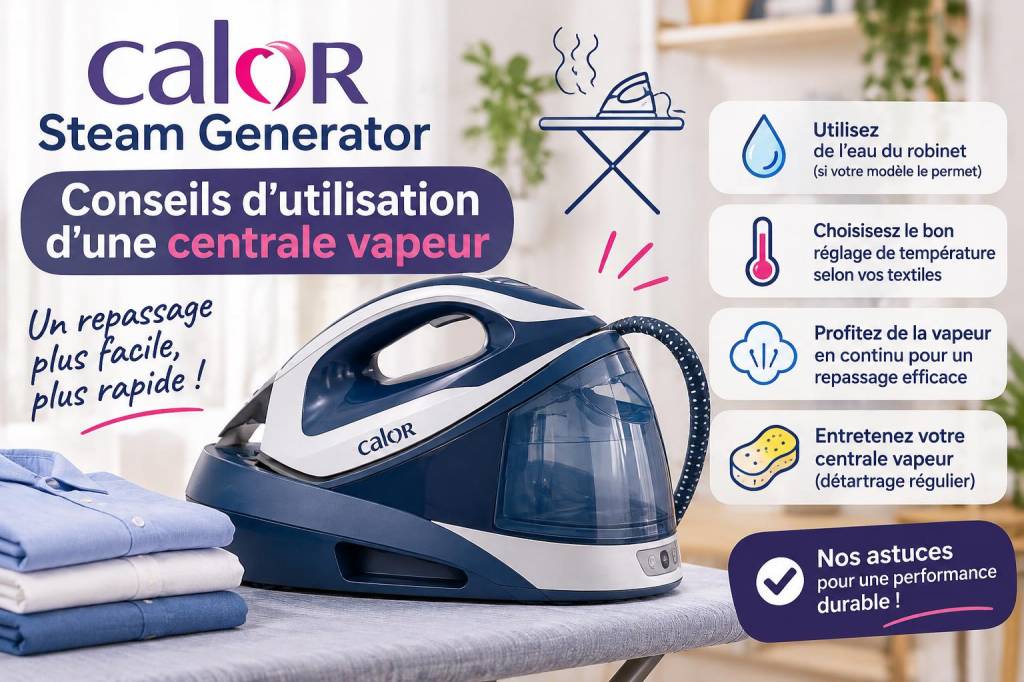
When I look at a steam generator iron from a practical content-creation angle, I see more than a household appliance: I see a small system that rewards precision, routine, and consistency. That is why I focus so strongly on conseils dutilisation dune centrale vapeur. If I understand the setup, water choice, heat management, and maintenance habits, I can get smoother results, protect fabrics, and extend the life of the device without unnecessary stress.
In my experience, many people use a steam generator like a regular iron, then wonder why the glide feels uneven, why steam output drops, or why water spots appear on clothes. A steam generator works differently from a basic iron because the boiler, pump, soleplate, and pressure system all need to operate together. Once I treat it as a complete workflow rather than a single tool, everything becomes easier. I save time, avoid fabric damage, and make the ironing session feel far less tiring.
What I pay attention to before switching it on
Before I press the power button, I always start with the basics. I check the water tank, inspect the cord path, and make sure the ironing board is stable. These small steps sound obvious, yet they are often what separates a smooth session from a frustrating one. A steam generator can be powerful, and power is only useful when I control it well.
I also look at fabric labels before I begin. Cotton, linen, wool, silk, viscose, and synthetic blends do not respond in the same way. If I iron delicate fabrics with too much heat, I risk shine marks or flattening. If I use too little heat on dense cotton, the steam effect feels weak and the wrinkles stay put. I prefer to sort items by temperature range so I do not keep changing settings back and forth.
When I want a quick reference, I use this practical checklist:
- Fill the tank only as far as allowed by the manufacturer.
- Use the fabric setting that matches the most delicate item in the pile.
- Place the base unit on a flat, secure surface.
- Let the appliance warm up fully before releasing steam.
- Keep the soleplate clean and free from residue.
Water quality and heating behavior matter more than most people think
Water quality is one of the most underestimated parts of steam generator care. In hard-water areas, limescale builds up quickly inside the boiler and around the steam circuit. That scale does not just shorten the life of the appliance; it can also reduce steam flow and leave mineral marks on fabric. I prefer to use the water type recommended in the manual, and when the machine allows it, I mix tap water and demineralized water according to the brand’s advice.
From a user-experience perspective, I notice a clear difference between a machine that has been maintained and one that has not. A clean system heats faster, delivers steadier steam, and glides with less resistance. A neglected system tends to spit, pulse irregularly, or feel inconsistent from one garment to another.
Several external sources support this maintenance logic. Rowenta, for example, explains that descaling habits protect performance and steam output. Philips also recommends regular descaling and proper water use for steam care devices. Consumer Reports has repeatedly noted that appliance longevity often depends on routine care rather than raw build quality alone. Those ideas align with what I observe in daily use: small habits create visible results.
I also keep in mind a few numbers that help frame expectations:
- Many steam generators operate with boiler pressure around 5 to 8 bar, which is much stronger than a standard iron.
- Steam bursts can exceed 100 g/min on many models, with some reaching much higher levels.
- Descaling reminders often appear after a set number of uses or after a certain amount of water processed, depending on the model.
My fabric strategy for clean results without damage
The most useful habit I have developed is to think in fabric layers. I do not just ask, “Is this garment wrinkled?” I ask, “What fiber structure am I dealing with, and what does it tolerate?” That question changes everything. A heavy cotton shirt can usually handle stronger steam and a firmer pass. A polyester blouse needs a gentler approach. A wool jacket may benefit from vertical steaming instead of direct contact. Silk demands even more caution, especially near seams and decorative areas.
Here is the process I prefer:
- I begin with garments that need medium heat, then move toward delicate pieces.
- I test a hidden area when I am unsure about a fabric blend.
- I keep the soleplate moving to avoid heat concentration.
- I use steam in short bursts instead of continuous pressure when working on fragile textiles.
- I hang pieces immediately after finishing so wrinkles do not return.
This approach matters even more when I deal with mixed fabrics. A shirt collar may tolerate a different level of heat than the body of the shirt. Pants pockets, printed areas, bonded hems, and synthetic linings can all react differently. I find it easier to save time in the long run by being careful up front than by repairing damage later.
Why maintenance routines protect performance and brand value
From a content marketing perspective, maintenance is a lot like brand consistency. If I keep up the routine, the system performs predictably. If I ignore the routine, problems compound quietly until they become expensive. Steam generator care works the same way.
I usually think in three maintenance layers:
| Maintenance layer | What I do | Result |
|---|---|---|
| After each use | Empty leftover water if advised, wipe the soleplate, store the cord neatly | Cleaner appliance and fewer deposits |
| Weekly or regular use | Check steam vents, inspect for residue, clean the tank area | Steadier steam and better glide |
| Periodic descaling | Run the descaling process according to the manual | Longer life and stronger performance |
One detail I never ignore is the soleplate. If residue builds up there, it transfers to clothing and also affects how evenly the iron glides. I clean it only with methods approved by the manufacturer, because aggressive cleaning can scratch the surface or damage coatings. The same principle applies to the water tank and anti-calc system: I do not improvise when the brand gives clear instructions.
I also keep a close eye on the way the appliance behaves. If steam starts to feel weaker, if the sound changes, or if droplets appear where I expect dry steam, I treat that as a signal rather than a nuisance. Early action is almost always cheaper and easier than later repair.
Common mistakes I try to avoid
Most problems with steam generator irons come from a handful of predictable mistakes. I have seen them often enough to know they are worth naming clearly.
- Using untreated hard water when the manual advises a different mix.
- Starting to iron before the unit has fully heated.
- Holding the soleplate still on a fabric for too long.
- Ignoring the descaling alert.
- Overfilling the tank.
- Leaving the appliance plugged in when I step away.
- Choosing the wrong heat level for delicate fabrics.
Another mistake is assuming that more steam always means better results. In reality, the right amount of steam depends on the material, the thickness of the garment, and the amount of creasing. Too much steam can saturate fibers unnecessarily, especially on fine fabrics. Too little steam can force me to press harder, which raises the risk of shine or shape distortion.
What I would compare before buying or upgrading
If I were choosing a steam generator today, I would compare more than just price. I would pay attention to pressure, steam output, heat-up time, tank capacity, descaling design, and weight balance. These factors influence real use far more than a flashy product image. A lighter iron head can reduce wrist strain, while a larger tank can reduce refill interruptions during longer sessions.
I also like to compare user support. A clear manual, accessible spare parts, and easy-to-understand maintenance instructions all matter. Brands such as Calor, Philips, Tefal, and Rowenta often distinguish themselves not only by features, but also by how easy they make the daily experience. For readers who care about content clarity, this is a useful analogy: a product that is easy to understand tends to earn trust faster than one that hides basic information.
Here is a simple comparison view I find useful when evaluating models:
| Feature | Why it matters to me | What I look for |
|---|---|---|
| Steam pressure | Affects wrinkle removal speed | Stable, high enough for thick fabrics |
| Tank size | Determines refill frequency | Enough capacity for my ironing volume |
| Descaling system | Protects long-term performance | Simple and accessible maintenance steps |
| Heat-up time | Saves time before starting | Fast readiness without instability |
Useful reading points and external references I trust
When I want to verify appliance advice, I do not rely on a single source. I cross-check with manufacturer pages and independent consumer resources. Three external references I find especially useful for steam appliance care are:
- Rowenta support pages on descaling and steam generator maintenance.
- Philips support articles on water use, limescale, and steam performance.
- Consumer Reports articles on appliance care, reliability, and long-term ownership costs.
These sources reinforce a simple idea: a steam generator performs at its best when I respect its operating logic. That means I think about water, heat, cleaning, fabric type, and storage as one connected system rather than separate tasks.
Practical habits I use every time I iron
My personal routine is simple enough to repeat, yet structured enough to prevent mistakes. I prepare the workspace, confirm the fabric mix, fill the tank correctly, wait for full readiness, and then work in controlled passes. I keep steam targeted, I avoid rushing the first garment, and I pause if the device starts to behave differently. This rhythm saves time and makes the results more consistent.
I also like to think about the broader content lesson here. Good instructions reduce friction. Clear maintenance reduces waste. Consistent usage creates trust. A steam generator is a household example, but the logic applies to many areas I write about in marketing and content creation: when people understand the process, they get better outcomes and feel more confident using a product again.