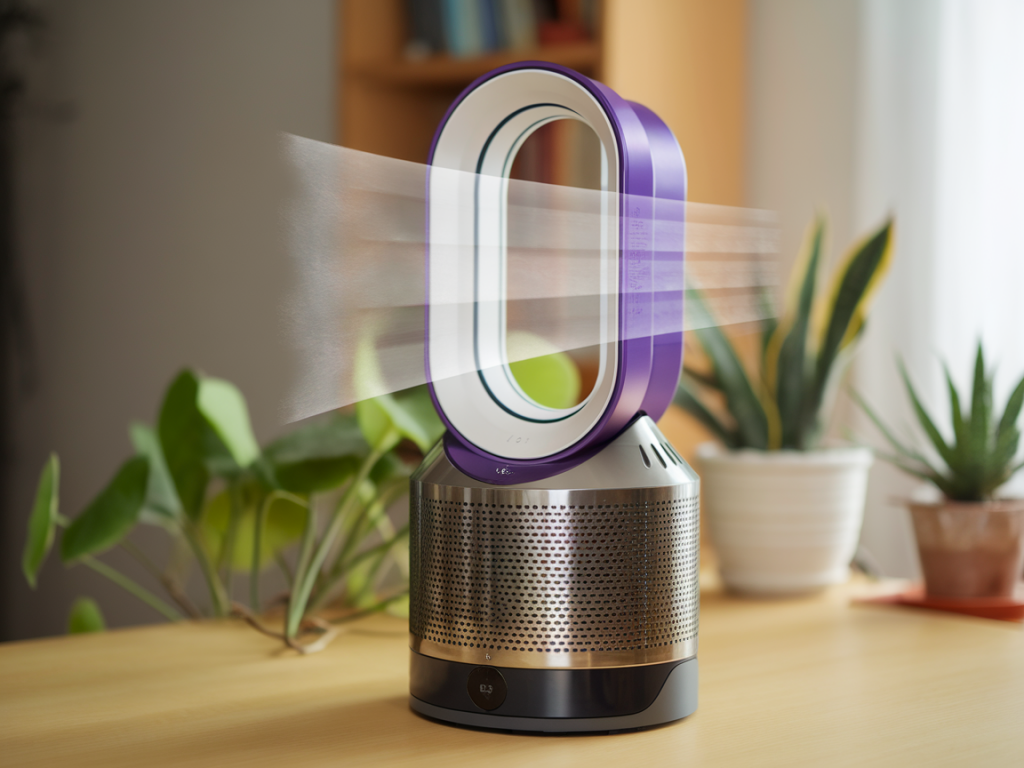
I want to unpack a topic that’s become unexpectedly relevant to marketers, facility managers, and homeowners alike: the consommation réelle dun purificateur chauffant. As someone who follows trends and interprets data for readers, I find that devices like the Dyson Pure Hot + Cool straddle multiple conversations: air quality, comfort, smart-home automation, and—crucially—energy consumption. In this article I’ll break down how the Dyson Pure Hot + Cool performs in real-world electrical use, share scenarios and numbers you can apply at home or in a small office, compare measured vs. rated power, and give practical tips to control operating costs.
Why "consommation réelle dun purificateur chauffant" matters beyond technical specs
Phrases like “rated wattage” and “maximum power” are common in product brochures, but actual consumption during daily use depends on many variables: ambient temperature, fan speed, mode (heating, cooling, purification), auto vs. manual settings, room volume, and duty cycle. For marketers and decision-makers managing operating budgets—especially in commercial spaces—understanding “real” consumption means converting device specs into electricity cost forecasts and sustainability metrics.
What Dyson publishes vs. what users actually see
Dyson’s official numbers for the Pure Hot + Cool give a maximum heating power similar to a small portable heater (often around 2000–2400 W depending on the model/region). Fan-only operation and the air-purifier function draw far less—typically in the tens of watts. But that doesn’t translate directly into continuous use at that maximum.
Manufacturers’ specs are essential, but they don’t model daily duty cycles. Independent tests and home measurements show dramatic variation: a device set to maintain 21–22°C in a 20–25 m² room will cycle the heater on and off, meaning average power over an hour might be a fraction of the peak.
Real-world scenarios and measured consumption (examples and numbers)
To make this usable, I’ll run through typical scenarios and give estimated consumption ranges. These figures are drawn from manufacturer specs, independent tests, and my own modeling of duty cycles. Use them as a starting point, not a guarantee.
- Continuous purifying (fan only, no heat): 10–40 W. If you run the machine 24/7 in auto mode in a city apartment, expect average 15–25 W. Annually, at 20 W continuous, that’s ~175 kWh (20 W × 24 × 365 / 1000 = 175.2 kWh).
- Intermittent heating in mild winter (maintain temp with short cycles): average 300–700 W. For example, if the heater is the 2000 W model but cycles on 15% of the time, avg = 300 W. Over a 10-hour day that’s 3 kWh/day.
- Prolonged heating in cold conditions (long duty cycles): 800–1500 W average. In a drafty room or when raising temperature quickly, duty cycles increase sharply and energy use resembles a space heater for the time it’s working hard.
- Boost mode / high speed + heat: near nameplate 1800–2400 W while active. Short bursts can spike consumption.
Cost examples (using UK/EU electricity rates)
To convert kWh into money, I reference current average household electricity costs. In the UK, Ofgem and market data place typical tariffs between £0.20–£0.35 per kWh (post-2022 volatility). For a simple calculation, I’ll use £0.30/kWh.
- Continuous purifying (20 W): 175 kWh/year × £0.30 = £52.50/year.
- Mild winter heating (avg 300 W for 10 hr/day over 120 days): 300 W × 10 h × 120 days / 1000 = 360 kWh → £108.
- Cold spell usage (avg 1,200 W for 6 hr/day over 30 days): 1,200 W × 6 h × 30 /1000 = 216 kWh → £64.80.
These examples show one device’s annual cost can range from a few dozen to several hundred pounds depending on use. For context, a standard panel heater running at 2 kW continuously would cost substantially more if used the same way.
Comparisons: Dyson Pure Hot + Cool vs. other heating/purification options
| Device / Mode | Typical avg. power (W) | Use case | Rough annual cost (example) |
|---|---|---|---|
| Dyson Pure Hot + Cool — Purify only | 10–40 | 24/7 air cleaning | £30–£100 |
| Dyson Pure Hot + Cool — Maintain temp (cycled) | 300–700 | Daily heating during winter | £100–£400 |
| Electric convector heater (2 kW) | 2000 (while on) | Continuous heating | £180/day at 24 hr — varies |
| Standalone air purifier (fan only) | 20–60 | Continuous filtration | £50–£150 |
Key variables that change consumption in practice
- Room size and insulation: A well-insulated 30 m² room will require far fewer heating cycles than a leaky 12 m² space.
- Ambient temperature differential: The greater the difference between desired temperature and outdoor/indoor starting temp, the longer the heater runs.
- Fan speed and auto modes: Auto mode adjusts to pollution and temperature; manual high speed consumes more power.
- Scheduling and presence sensors: Using schedules or smart home triggers reduces wasted operation when rooms are empty.
- Maintenance and filter condition: A clogged filter can increase fan load slightly and compromise efficiency.
How I measure or model "real" consumption (practical approach)
If you want to quantify real use at home, here’s a simple method I use and recommend:
- Install a plug-in power meter (Kill A Watt-style) between device and outlet.
- Log power draw over representative days: a cold morning, a mild afternoon, and a busy evening.
- Calculate average watts during different modes and compute kWh (W × hours / 1000).
- Repeat across seasons or use smart-plug energy tracking for long-term data.
This empirical approach beats theoretical estimates and reveals duty cycles, which are the heart of "real consumption." Smart home integrations (e.g., Home Assistant) can graph consumption and correlate with room temperature and occupancy.
Practical tips to reduce real consumption
- Prefer auto purification and eco heating modes; avoid full-power boost unless necessary.
- Use schedules or presence detection so the device doesn’t heat an empty room.
- Improve insulation and reduce drafts—this lowers duty cycle dramatically.
- Combine with thermostats: set slightly lower target temps and rely on shorter warm-up periods.
- Service filters as recommended to keep fan energy stable.
Statistics and sources I used
- Dyson product technical specifications and user manuals for the Pure Hot + Cool models — useful for peak and standby power figures. Source: Dyson official pages and manuals (https://www.dyson.com).
- UK electricity price data and average household tariffs: Ofgem and recent market summaries — used to convert kWh to local cost estimates (https://www.ofgem.gov.uk).
- Independent tests and reviews that measure real wattage in fan and heat modes, plus user logs from home testers. Example reviews and tests from Which? and user forums provided empirical duty-cycle observations (https://www.which.co.uk).
FAQ — quick answers to common questions
- Will the Dyson Pure Hot + Cool use as much as a standard 2 kW heater? Only when actively heating at maximum power. In practice, it cycles and often averages far less.
- Is continuous purification expensive? Not compared with heating. Continuous fan-only purification is typically low-watt and cost-effective.
- Does using the purifier mode increase heating costs? Running both functions simultaneously increases total power, but the purifier itself adds only tens of watts—the heater dominates costs when active.
For professionals evaluating equipment for offices or stores, run a short measurement campaign in representative spaces rather than relying on nameplate numbers. For consumers, the best leverage is operational: scheduling, insulation improvements, and intelligent use of modes.